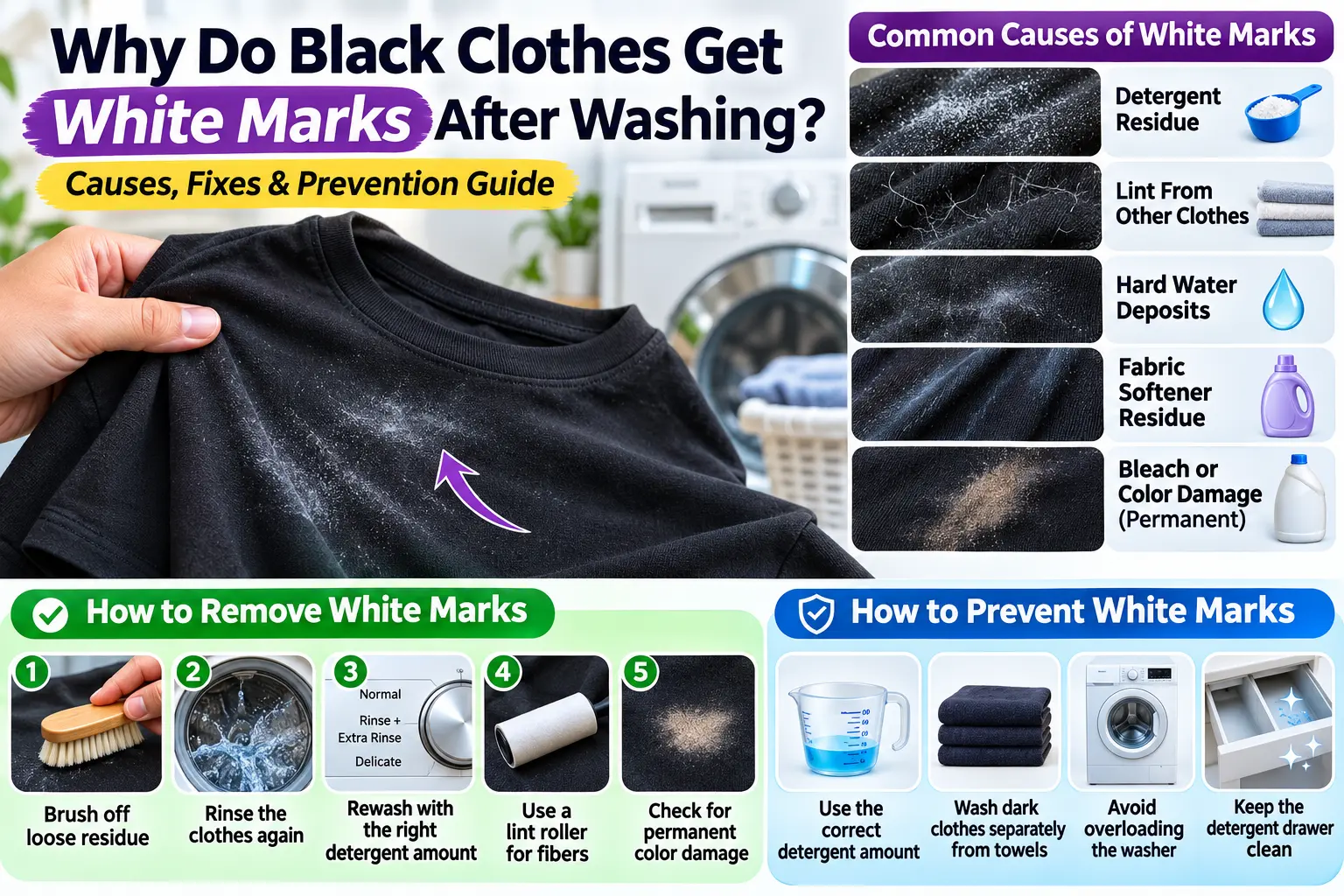
Why Do Black Clothes Get White Marks After Washing? 7 Fixes
White Marks on Black Clothes After Washing: Have you ever pulled your favorite black T-shirt out of the washing machine only to find white streaks, powdery spots, or dusty-looking marks on the fabric? It can be frustrating, especially when your clothes looked perfectly clean before washing.
The good news is that many white marks on black clothes are removable. However, not every mark is detergent residue. Some come from lint, hard-water deposits, fabric softener, or permanent color damage.
The best solution depends on identifying what is actually causing the problem.
In this guide, you will learn why black clothes get white marks after washing, how to identify different types of residue, how to remove them safely, and how to prevent them from coming back.
Read More: Blogs
Why Do Black Clothes Get White Marks After Washing?
White marks on black clothes can have several different causes. Here are the most common ones.
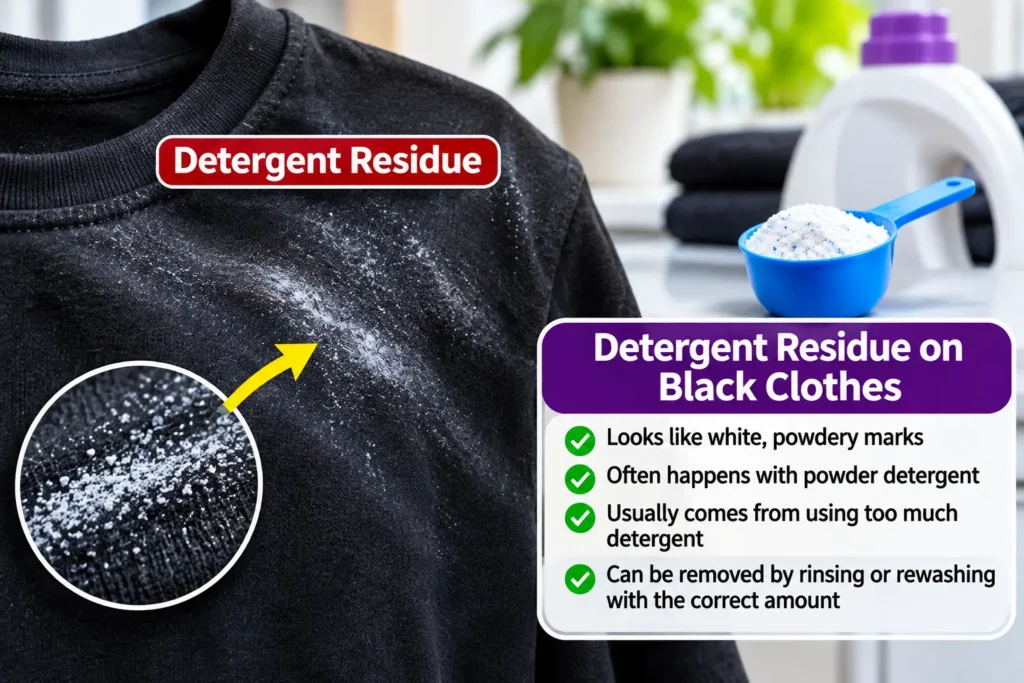
1. Detergent Residue
Detergent residue is one of the most common reasons black clothes develop white streaks after washing.
When detergent does not dissolve or rinse away properly, particles can remain on the fabric. These deposits are particularly noticeable on dark clothing because the contrast makes even small amounts of residue visible.
Powder detergents may leave chalky-looking marks when their ingredients do not dissolve completely. Some powdered detergents also contain zeolites, which are water-softening compounds that can remain on dark fabrics.
According to Miele’s laundry troubleshooting guidance, these deposits may look like powder detergent on dark textiles.
What it looks like:
- White or gray powdery marks
- Chalky streaks on black fabric
- Residue that may brush off after drying
- Marks that become less noticeable after rinsing
2. Too Much Laundry Detergent
Using more detergent does not automatically make clothes cleaner.
Excess detergent can create residue, particularly when the washing machine cannot rinse the clothes effectively.
The problem may become worse when:
- You use more detergent than the load requires.
- The washing machine is overloaded.
- The detergent is not appropriate for your washer.
- The wash cycle does not provide enough rinsing.
- Concentrated detergent is measured incorrectly.
Maytag identifies excessive detergent, improper detergent type, and detergent buildup as potential causes of white residue on clothing.
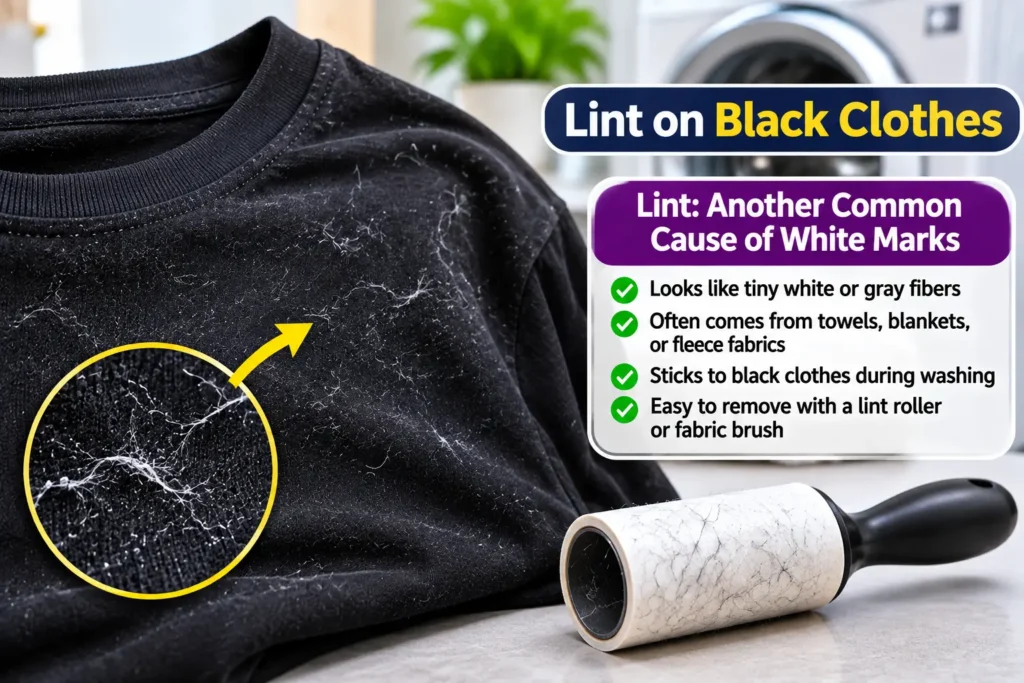
3. Lint From Other Clothes
Sometimes those white marks are not detergent at all.
Lint from towels, blankets, fleece, and other lint-producing fabrics can attach itself to black clothing during washing.
This is particularly noticeable when washing black shirts with white towels.
How to identify lint:
- The marks look like tiny fibers rather than powder.
- You can often remove them with a lint roller.
- They may appear across the surface of the fabric.
- The marks are more noticeable after washing mixed loads.
New towels can release substantial lint during their first washes. Maytag recommends separating lint-producing fabrics from lint collectors when excessive lint is a problem.
4. Hard Water Deposits
Hard water contains minerals such as calcium and magnesium.
These minerals can interact with detergent and contribute to deposits on clothing. The result may be a dull, chalky, or grayish appearance on dark fabrics.
Hard-water-related residue is more likely to be a recurring problem than an isolated stain.
If the same marks appear on multiple loads, even after changing detergent amounts, water quality may be worth investigating.
5. Fabric Softener Residue
Fabric softener can leave marks when it is used incorrectly or does not distribute properly during the wash.
Common mistakes include:
- Pouring fabric softener directly onto clothes.
- Using more than the recommended amount.
- Filling the dispenser above its maximum line.
- Adding softener to the wrong compartment.
- Using a dirty or obstructed dispenser.
Fabric softener marks often look greasy, oily, or darker than the surrounding fabric rather than dry and powdery.
Samsung identifies incorrect softener use and dirty detergent drawers as possible causes of laundry stains.
6. Washing Machine Buildup
Detergent, fabric softener, and other laundry residues can accumulate inside a washing machine over time.
This buildup may contribute to marks appearing on freshly washed clothes.
If white or gray residue appears repeatedly on different garments, inspect the detergent drawer and clean the washer according to its owner’s manual.
Do not assume the machine needs professional repair immediately. First determine whether the residue is coming from detergent, additives, water, or the laundry itself.
7. Permanent Bleach or Color Damage
This is the most important distinction to understand.
A white mark caused by detergent residue may disappear after brushing or rinsing. A mark caused by bleach or permanent color loss will not.
Bleach damage removes or alters the fabric’s original color. It may appear as a pale patch, orange spot, pink discoloration, or an irregular white blotch.
Samsung explains that bleach damage on colored clothing can produce permanent white blotches.
If the fabric itself has lost its color, another wash will not restore it.
How to Identify the Cause of White Marks on Black Clothes
Before trying a cleaning method, inspect the affected garment.
| What You Notice | Possible Cause | What to Try First |
|---|---|---|
| Powdery white spots | Detergent residue | Brush and rinse |
| White fibers on fabric | Lint | Use a lint roller |
| Chalky gray film | Mineral or detergent deposits | Rinse and check water quality |
| Oily or shiny marks | Fabric softener | Rewash according to care label |
| Pale permanent patches | Bleach or color damage | Check for irreversible discoloration |
| Marks on several garments | Washer, detergent, or water issue | Inspect the wash process |
This table is a troubleshooting guide, not a definitive chemical test. Several types of residue can look similar.
How to Remove White Marks From Black Clothes
Follow these steps in order. Stop once the marks disappear.
Step 1: Brush Off Loose Residue
If the clothes are already dry, use a soft clothing brush to remove loose powder or deposits.
Brush gently to avoid damaging the fabric.
For lint, use a lint roller instead.
Miele recommends brushing off detergent-like residues from dark textiles after they have dried.
Step 2: Rinse the Clothes Again
If the marks remain, check the garment’s care label and rinse it using a suitable washing-machine cycle.
An additional rinse may help remove detergent residue that remains on the fabric.
Do not automatically add more detergent.
Step 3: Rewash Without Extra Detergent
If brushing and rinsing do not work, rewash the affected clothing.
Use:
- A suitable wash cycle for the fabric.
- The recommended detergent dosage.
- A load size that allows proper movement and rinsing.
- A temperature permitted by the care label.
If the original problem was excess detergent, adding more during the second wash may make the problem worse.
Step 4: Remove Lint Separately
If the marks are loose fibers, a lint roller is usually the simplest option.
For stubborn lint, use a fabric-safe lint remover according to its instructions.
Avoid aggressive scraping or rubbing that may damage the garment.
Step 5: Check for Permanent Color Damage
If a pale patch remains after rinsing and washing, inspect the fabric carefully.
A permanent bleach mark may not respond to cleaning.
Fabric dyeing or color restoration may be possible in some cases, but results depend on the material, garment color, and extent of damage.
Do not apply additional bleach to black clothing in an attempt to remove the mark.

How to Prevent White Marks on Black Clothes
Prevention is easier than repeatedly rewashing dark garments.
Use the Correct Detergent Amount
Follow the detergent manufacturer’s instructions for your load size, soil level, and water conditions.
Concentrated detergents require careful measuring.
Using excessive detergent can create residue rather than improve cleaning.
Choose a Suitable Detergent for Dark Clothes
If powder detergent repeatedly leaves chalky marks on dark garments, consider trying a liquid laundry detergent.
Miele notes that liquid detergents generally do not contain the zeolites found in some powder detergents.
However, liquid detergent is not a guarantee against residue. Excessive liquid detergent can also cause washing problems.
Avoid Overloading the Washing Machine
Overloaded washers may not provide enough room for clothes to move and rinse effectively.
Follow your washing machine’s loading recommendations.
Separate Towels From Black Clothing
Wash lint-producing fabrics separately from black shirts, pants, and other dark garments.
This reduces the amount of lint that can attach to dark fabrics.
Clean the Detergent Drawer
Periodically inspect and clean the detergent drawer according to the washing machine’s instructions.
Remove accumulated detergent and softener residue.
Use the Correct Washing Cycle
Choose a cycle appropriate for the fabric and soil level.
If residue repeatedly remains after washing, check whether an extra rinse is available.
Do not select excessively hot water simply to dissolve detergent. Always follow the garment care label.
Is Liquid Detergent Better for Black Clothes?
Liquid detergent can be a useful choice for washing black clothing, particularly when powder detergent repeatedly leaves visible residue.
Some powder detergents contain insoluble water-softening compounds that may deposit on dark fabrics.
Liquid detergents generally avoid this particular issue.
However, detergent performance depends on the formulation, dosage, water conditions, washing machine, and fabric.
The practical recommendation: If powder detergent leaves white marks on your black clothes, try a suitable liquid detergent at the recommended dosage and compare the results.
Do not assume that changing detergent alone will solve lint, hard-water deposits, fabric softener stains, or permanent bleach damage.
Can Vinegar Remove White Marks From Black Clothes?
Vinegar is sometimes suggested as a laundry remedy for residue.
The American Cleaning Institute lists a diluted white-vinegar treatment for certain powder-detergent and hard-water-related fabric residues.
However, vinegar is not a universal solution for every white mark.
It will not restore color removed by bleach, and it is not a substitute for identifying the cause.
Before using any treatment:
- Check the garment care label.
- Test an inconspicuous area if appropriate.
- Follow the manufacturer’s fabric-care recommendations.
- Never mix vinegar with chlorine bleach.
If you are unsure about the fabric or treatment, a plain rinse or suitable rewash is the safer starting point.
When White Marks Cannot Be Removed
Some marks are permanent.
If bleach has removed the dye from black fabric, washing will not restore the original color.
Likewise, severe fabric damage or abrasion may create a pale appearance that cannot be corrected through ordinary cleaning.
In these situations, possible options include:
- Fabric dyeing, if the material is suitable.
- Professional garment restoration.
- Using the garment for less visible purposes.
- Replacing the item if restoration is impractical.
Do not waste repeated wash cycles trying to remove a permanent color-loss mark.
Frequently Asked Questions
Why do my black clothes have white streaks after washing?
White streaks may come from detergent residue, hard-water deposits, lint, or other laundry products. If the marks disappear after brushing or rinsing, they may be removable deposits. Permanent pale patches may indicate color damage.
How do I remove detergent residue from black clothes?
Start by brushing off loose residue from dry fabric. If marks remain, rinse or rewash the garment using the correct detergent amount and a suitable cycle.
Is liquid detergent better for black clothes?
Liquid detergent may reduce certain powder-related residue problems. However, using too much liquid detergent can also leave deposits. Correct dosage and rinsing remain important.
Why do black clothes get white marks in cold water?
Some powder detergents may not dissolve properly under certain cold-water conditions. Excess detergent, unsuitable detergent formulations, and insufficient rinsing can contribute to residue.
Can bleach marks be removed from black clothes?
Permanent bleach damage cannot be removed through ordinary washing because the original fabric color has been lost. Dyeing may help in some cases, depending on the material.
Why do black clothes look dusty after washing?
Dusty-looking marks may be lint, detergent residue, or mineral deposits. A lint roller can help identify loose fibers, while brushing and rinsing may remove some detergent residue.
Why do white marks appear on several black clothes at once?
If multiple garments develop similar marks in the same wash, investigate detergent dosage, water quality, fabric softener, washer buildup, and lint from other items.
Conclusion
White marks on black clothes after washing are frustrating, but many are preventable.
The key is to identify the cause before choosing a solution.
Start with the simplest checks: brush off loose residue, remove lint, rinse the garment, and review your detergent amount. If the problem continues across multiple loads, inspect your washing machine and water conditions.
Remember that detergent residue and permanent bleach damage are two very different problems. Knowing the difference can save time, money, and unnecessary rewashing.
Sources and Further Reading
- Miele USA – White Residues on Laundry
- Samsung – Laundry Is Stained or Damaged After Washing
- Maytag – Clothing Has White Residue
- American Cleaning Institute – Laundering Problems & Solutions
Always follow your garment care label and washing machine manufacturer’s instructions.
Editorial Note
This article is an educational troubleshooting guide based on manufacturer guidance and established laundry-care resources. Individual results may vary depending on fabric, detergent, water conditions, and washing machine.